
Photochromic Lenses in the Car: What Activates Behind the Windshield and What Does Not
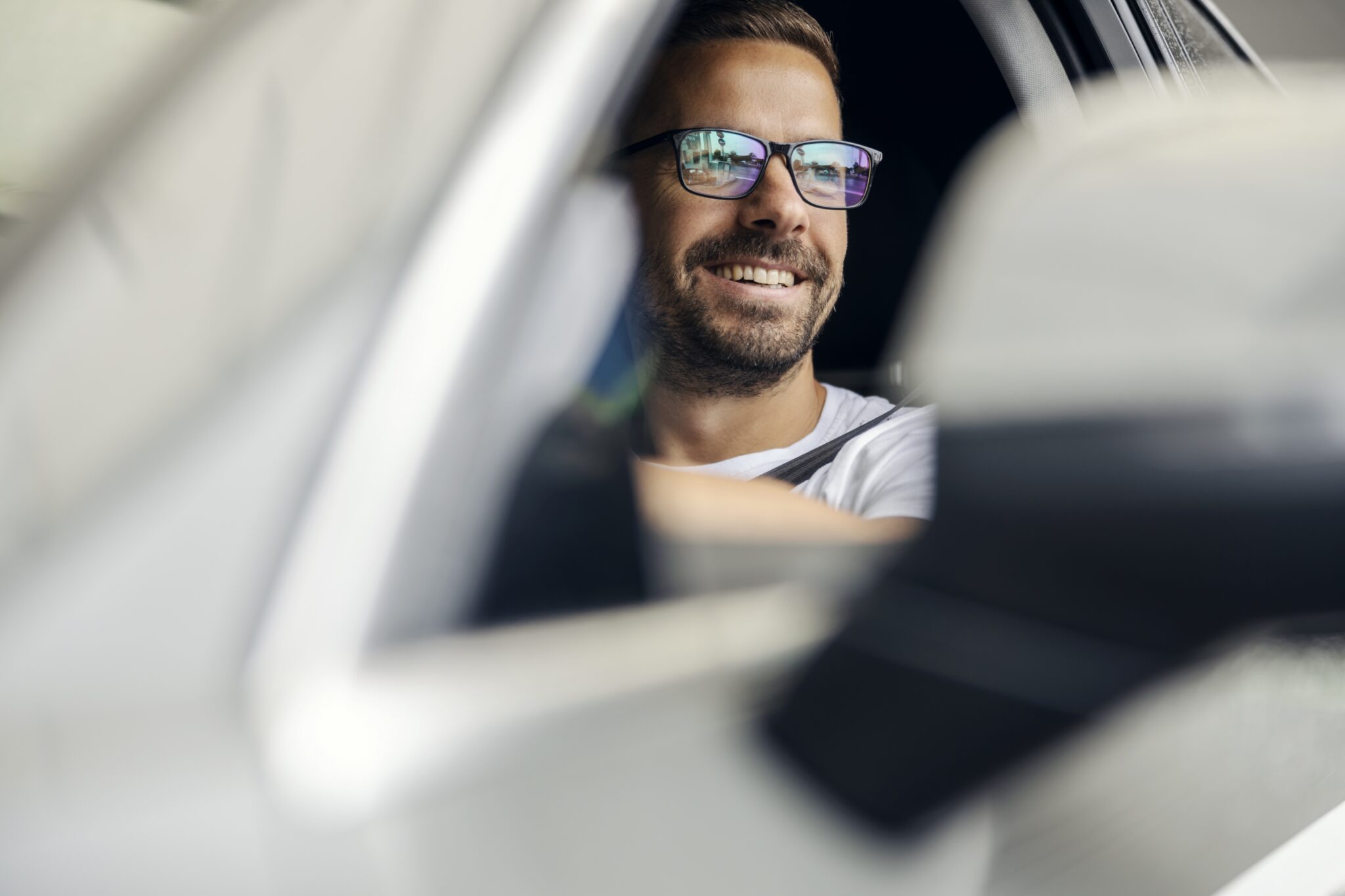

A standard photochromic lens barely darkens behind a windshield, and the patient who bought it for driving finds that out on the first sunny commute. They come back to your counter convinced the lenses are defective. They are not defective. They are working exactly as designed, on a light source the windshield removed before it reached the lens. Practices that explain this before the sale never field the complaint. Practices that skip it absorb a remake conversation for a lens that was made correctly.
The confusion is reasonable. A patient watches the lens darken the moment they step outside and assumes it responds to brightness. It responds to ultraviolet light, and that single distinction is the whole story of photochromic lenses in the car.
Why the Belief Is So Widespread
Photochromic molecules change shape when ultraviolet radiation hits them, and that shape change is what darkens the lens. Outdoors, UV and visible brightness arrive together, so the lens darkens fast and deep while the wearer credits the brightness they can see rather than the UV they cannot.
Inside a car, the two separate. The cabin stays bright while the UV is gone, so a lens with nothing to react to sits clear next to a wearer who still sees a sunny windshield. For the full chemistry of the reaction, the site’s overview of how standard photochromic lenses are triggered covers it in plain terms.
What the Windshield Actually Does
A modern windshield is laminated glass: two layers with a plastic interlayer bonded between them. That interlayer is an efficient UV filter, blocking roughly 98 to 99 percent of UV before it reaches the driver. For a photochromic lens tuned to UV, that is effectively total. The lens sits in a cabin that is optically “night” as far as its trigger is concerned, even at noon.
Side and rear windows behave differently. Most are tempered glass, not laminated, and tempered glass blocks far less UV. A wearer can sometimes see a faint, uneven tint on the side of the face closer to a side window, while the forward view through the windshield stays clear. That asymmetry is another tell that the trigger is UV and not brightness. It also means the windshield, not the car in general, is the specific barrier.
Where Heat Fits In
Photochromics are also temperature-sensitive: they reach a lighter maximum tint when warm and a deeper one when cool. A hot Florida cabin would blunt the tint even if UV were present. This is a secondary factor here, not the main one, and it belongs to the separate question of how lenses hold up in high heat. Behind the windshield, the missing UV is the dominant reason the lens stays clear, with heat a smaller contributor on top.
The Lenses That Do Respond in the Car
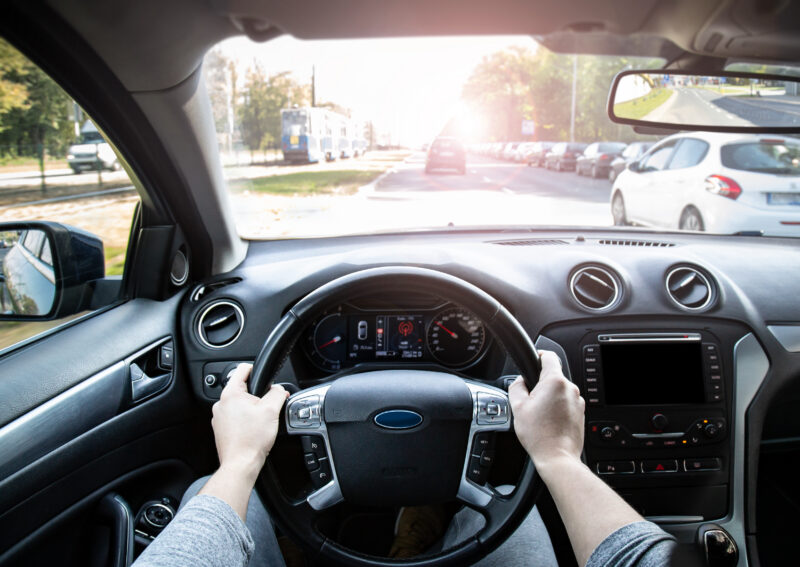
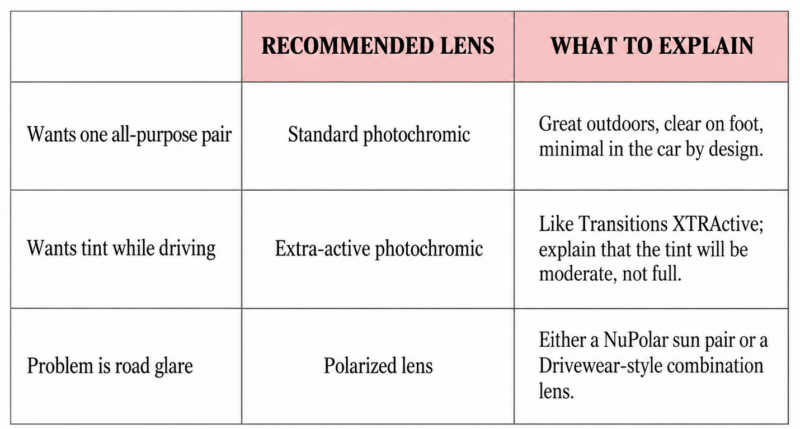
Some photochromic adaptive lenses are tuned to react to part of the visible spectrum, not UV alone. Transitions XTRActive is the common example: because visible light passes through a windshield freely, it reaches a moderate tint while driving, though not the full darkness it hits outdoors. That partial activation is the honest promise: usable tint for daytime driving, not a true sunglass.
The trade-off is worth stating at the counter. A lens tuned to activate on visible light often keeps a slight residual tint indoors and takes longer to clear fully, because the trigger it reads is present in more environments. For a patient whose main goal is comfortable daytime driving, that is usually an acceptable exchange. For a patient who wants water-clear lenses at their desk and dark lenses on the road, it is not, and no single photochromic does both jobs perfectly.
Polarized Is a Different Tool for a Different Problem
Driving discomfort is often glare, not brightness: sun bouncing off a wet road, a hood, or the car ahead. Photochromic tint reduces overall light, but it does nothing for reflected glare, because glare is a polarization problem. A polarized lens filters that reflected light directly, and it does so at a fixed tint that does not depend on UV or on the windshield at all.
That makes polarized driving lenses the cleaner recommendation for a patient whose real complaint is glare on the road. A dedicated polarized sun pair, such as a NuPolar lens drawn from the full range of lens solutions a lab can produce, solves the exact problem the failed photochromic never could. A driving-specific option like Transitions Drivewear goes further: it pairs NuPolar polarization with a visible-light photochromic, so one lens gives both variable tint and glare control behind the wheel.
What to Recommend Instead of a Refund
The fix for photochromic lenses in the car is a two-minute conversation before the order, not a remake after it. Ask what the patient actually wants the lens to do in the car. The answer sorts them cleanly.
A quality anti-reflective coating on any of these cuts the internal reflections that worsen night driving, a separate benefit that applies regardless of tint.
Matching the lens to the stated use is what prevents the counter complaint. A remake on a correctly made lens is pure lost margin, and the way to avoid it is to sell the right lens the first time.
The Bottom Line
The lens that “fails” in the car is usually the lens that was matched to the wrong expectation, not the wrong lens. Name the windshield before the sale, steer the drivers who need tint or glare control to an extra-active or polarized option, and the driving complaint drops off your remake log. A practice that can explain the windshield in one sentence sells more confidently than one that discovers the problem at the pickup counter.
Practices building out a driving-lens and second-pair menu can open an account or talk through the options with the lab before recommending them at the chair.
Frequently Asked Questions
- Do photochromic lenses work while driving?
Standard photochromic lenses barely darken while driving, because they activate on ultraviolet light and a laminated windshield blocks about 98 to 99 percent of UV. Extra-active designs that also respond to visible light, such as Transitions XTRActive, reach a moderate tint in the car, but not the full darkness they hit outdoors. - Why do my patient’s photochromics darken outside but not in the car?
Outdoors, UV and brightness arrive together, so the lens darkens. The windshield removes almost all the UV while leaving the cabin bright, so the trigger the lens reads is gone even though it still looks sunny to the wearer. - Are side windows different from the windshield?
Yes. Windshields are laminated glass and block most UV. Side and rear windows are usually tempered glass and block far less, so a wearer may notice a faint tint on the side of the face near a side window while the forward view stays clear. - What should I recommend for a patient who wants sun protection while driving?
Match the recommendation to the real goal. For daytime tint, an extra-active photochromic such as Transitions XTRActive. For reflected road glare, a polarized lens like NuPolar, either as a dedicated sun pair or as a Drivewear-style lens that combines polarization with a visible-light photochromic. - Do extra-active photochromics have a downside?
They often keep a slight residual tint indoors and clear more slowly, because they react to visible light that is present in more environments than UV alone. That is an acceptable trade for many drivers, but not for a patient who wants fully clear lenses at a desk. - Does polarization depend on UV or the windshield?
No. Polarization filters reflected glare at a fixed tint and works the same inside a car as outside. That independence is why polarized is the more reliable answer when the patient’s actual complaint is glare rather than brightness. - Does heat affect photochromic performance in the car?
Photochromics reach a lighter tint when warm, so a hot cabin blunts activation further. Behind the windshield, though, the missing UV is the main reason the lens stays clear. Heat is a secondary factor layered on top.


