
The Second Pair Conversation for Optometrists: How to Make It Routine, Not Optional


A Clinical and Operational Guide for Independent Optical Practices
Most independent practices lose second pair revenue not because patients refuse, but because the conversation never happens.
The problem: occupational progressive lenses, computer lenses, and prescription sun lenses are presented as upsells, not clinical recommendations. Patients hear a pitch and decline. The opportunity disappears quietly, without complaint or confrontation.
The solution is structural. When second pair triggers are captured in pretesting, communicated in the doctor handoff, and addressed in the first third of the dispensing discussion, capture rates rise from the industry average of 10 to 15% to as much as 20 to 30% in consistently high-performing practices. That gap, for a practice seeing 40 dispensing patients per week, is $130,000 to $180,000 in annual revenue.
This guide covers what makes a second pair clinically justified, which patients to identify and when, how to build the conversation into your workflow, and how to handle the insurance objection.
Why the Second Pair Conversation Fails Before It Starts
The most common reason practices don’t have this conversation isn’t that opticians are reluctant to sell. It’s that the conversation is framed wrong, or isn’t framed at all.
When a second pair is presented as an upsell (“We also have a deal on sun lenses today”), patients hear a pitch. They compare the price to what they planned to spend, decide it’s more than they budgeted, and decline.
When a second pair is presented as a clinical recommendation, connected to a specific finding from the exam, a stated lifestyle need, and a concrete visual problem it solves, patients hear something entirely different. They hear their doctor noticing something about how they actually live and responding to it.
The same product. Completely different reception.
The frame of the conversation determines the outcome. And the frame starts before the patient ever sits down in the optical chair.
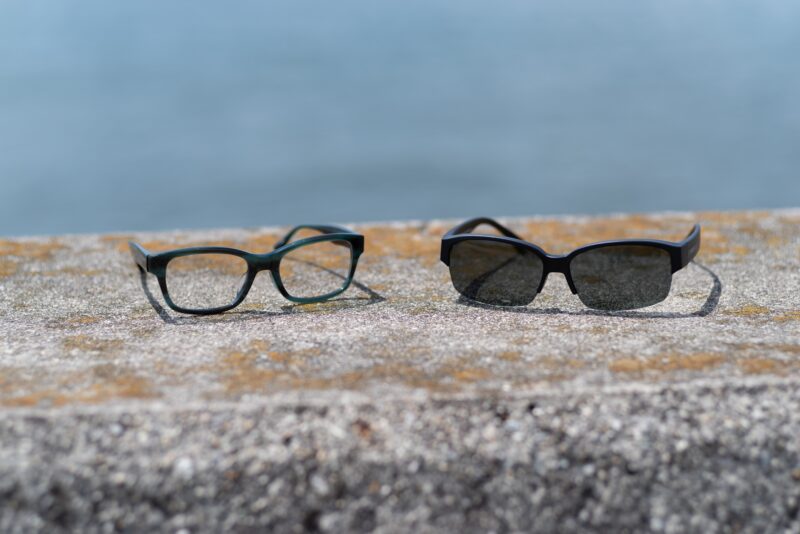
What Makes Occupational Progressive Lenses Clinically Justified as a Second Pair
A second pair is not a luxury item dressed up in clinical language. For a large portion of the adult patient population, particularly those over 40 with presbyopia, two pairs of lenses address genuinely different visual tasks that a single progressive lens handles imperfectly by design.
Understanding why requires understanding how progressive lenses work, and what they don’t do.
A standard progressive addition lens divides the lens into three functional zones: a distance zone in the upper portion, a reading zone in the lower portion, and a corridor connecting them. The corridor is typically 4 to 6mm wide at its narrowest point. It’s adequate for most gaze directions most of the time. But it’s a compromise: a single lens solution engineered to cover the full range of human visual demand.
The compromise becomes a problem at specific working distances that don’t match the lens’s optimization.
The Desk Worker: The Case for Computer Lenses
A standard progressive optimizes the intermediate zone at approximately 60 to 80cm, the typical distance between a person’s eyes and a monitor. For a patient spending eight hours a day on screens, this is the dominant visual demand, not an occasional one. Lenses for screen use optimized for this environment, which Mialab produces as the Remedy Office lens, offer a wide, clear intermediate zone and a full near zone, without dedicating lens real estate to distance vision that isn’t being used at a desk. The result is a wider, more stable field of view for exactly the work that causes end-of-day fatigue. The standard progressive technically covers this working distance. The occupational progressive lens is built for it.
The Presbyopic Driver
The distance zone of a standard progressive is typically 35 to 40% of the vertical lens height. For driving, particularly at night, on highways, or in high-glare environments, patients need maximum peripheral clarity. A standard progressive narrows quickly in the periphery; a patient looking through the lateral portions of the distance zone encounters blur and peripheral distortion from the surface astigmatism inherent in all progressive designs. The Remedy Drive progressive specifically extends and widens the distance zone and optimizes the corridor geometry for driving visual demands, including reduced peripheral distortion and improved intermediate clearance for instrument panel viewing at approximately 70 to 80cm.
The Sun Lens Patient
Every presbyopic patient who drives, spends time outdoors, or reports glare sensitivity is a sun lens candidate. Photochromic lenses do not darken inside cars, because standard vehicle windshields block the UV radiation that triggers photochromic activation. A patient who relies on photochromic lenses for sun protection on the road has less protection than they think. Prescription polarized lenses eliminate horizontally polarized light reflected from road surfaces, water, and wet pavement, reducing glare in a way that photochromics cannot replicate. This is not a cosmetic point. It is a safety point, and patients receive it as one.
The Backup Pair
Single-pair dependency creates a medical vulnerability that most patients don’t think about until they’re sitting in your office with a broken or lost frame and no way to drive home or work the next day. The dependency is also tactically expensive for the practice: an emergency remake on the original pair under warranty or at cost occupies the lab’s capacity, requires fast turnaround, and consumes staff time that could go elsewhere. A backup pair addresses this risk and generates revenue from what is otherwise a well-served, low-conversion appointment.
Clinical Trigger Points for a Second Pair Recommendation
The second pair conversation doesn’t need to be invented or forced. The information that justifies it is already being collected. It just isn’t being used consistently at the point of dispensing.
Every independent optical practice should map the exam findings and intake responses that trigger a specific second pair recommendation. Here are the clinical triggers that most reliably support it:
Presbyopia with computer or near-task complaints. Any patient over 40 who mentions eye fatigue, headaches in the afternoon, difficulty focusing on a monitor, or blurry vision after sustained screen time is describing accommodative strain at a working distance that may not match their progressive lenses for presbyopia. The conversation is: “Your exam is fine. The issue is that your current lenses are optimized for a wide range of distances, including driving. For the eight hours a day you’re on a screen, a lens built specifically for that working distance would be noticeably more comfortable.”
Presbyopia with driving-related complaints. Any patient who mentions night driving difficulty, glare on highways, halos around headlights, or difficulty finding clear vision quickly through their progressive while driving is describing the peripheral limitations of standard progressive geometry. The explanation matters: “This isn’t a prescription problem. Your prescription is accurate. Progressive lenses are a compromise between distance, intermediate, and near vision. For driving specifically, there’s a design that extends the clear distance zone further into the periphery and handles the quick gaze shifts you need at the wheel.”
Sun exposure, outdoor activities, or time on water. Any patient who mentions outdoor sports, fishing, time at the beach, or general light sensitivity is a polarized sun lens candidate. The clinical frame is UV protection and glare reduction, not aesthetics. In South Florida, where UV index frequently reaches category “extreme” and year-round outdoor activity is common, this conversation is almost universally indicated.
Significant prescription change. A meaningful sphere or cylinder update, particularly for a long-term patient whose prescription has been stable for years, creates natural uncertainty about adaptation. A backup pair provides functional security during the adjustment period.
History of broken or lost glasses. A patient who has replaced glasses due to breakage in the last two to three years is demonstrating that single-pair dependency is a pattern. “The last time you came in, it was because of a broken frame. That’s always stressful. A backup pair means you’re never in that situation.”
How to Build the Second Pair Conversation Into Your Optical Practice Workflow
The second pair conversation fails when it’s left to individual opticians to initiate and frame on their own, in the middle of a busy dispensing session. It succeeds when it’s built into the workflow, when the clinical trigger points are captured in pretesting and handed off explicitly to the optician.
The intake handoff. The pretesting intake form or technician notes should capture: primary occupation and screen time, driving frequency, outdoor activities, and previous eyewear issues. These responses should be visible to the optician before the dispensing conversation begins. “I see you mentioned spending most of your workday at a computer, and I want to talk to you about that” is a much stronger opening than “Did you want to look at a second pair today?”
The doctor-to-optician communication. When the doctor finishes the exam, the verbal or written handoff to the dispensing optician should include second pair triggers explicitly. “This patient has a significant computer demand. Worth discussing the Remedy Office lens” takes ten seconds and gives the optician both the recommendation and the clinical authority behind it. The optician is no longer suggesting a second pair. They’re carrying forward the doctor’s recommendation.
The dispensing sequence. The second pair conversation belongs in the lens recommendation discussion, not at the end, after the patient has already made a primary decision and mentally closed the appointment. When the optician presents lens options, both pairs should be discussed in the same breath: “For your primary pair, I’m recommending our full progressive. But given what you mentioned about the computer, I also want to show you what a dedicated office lens feels like, because most patients who try both keep both.”
The visual demonstration. When possible, show the difference rather than describe it. A patient looking at a chart through a standard progressive, then through an occupational progressive lens at intermediate distance, often makes the second pair decision in thirty seconds. The demonstration replaces explanation.
What the Numbers Say: Second Pair Revenue for Independent Practices
For practices that have built second pair conversations into their workflow consistently, the impact on revenue per dispensing patient is substantial, and the underlying economics explain why the conversation is worth systematizing.
Industry benchmarks put second pair capture rate for independent practices at 10 to 15%. High-performing practices consistently reach 20 to 30%. The gap between those numbers, at a practice seeing 40 dispensing patients per week, is significant: at an average second pair revenue of $250 to $350, the difference between 12% and 25% capture rate translates to roughly $2,500 to $3,500 in additional weekly revenue, or $130,000 to $180,000 annually.
This is not speculative. It is the result of making a conversation systematic rather than optional.
The second pair also has an asymmetric relationship with patient satisfaction. A patient who leaves with two pairs that each serve a specific visual function well reports better outcomes and rates the practice more highly, not because they spent more, but because their actual visual needs were addressed more precisely. The lab order for the second pair is not a burden on the relationship. It is the evidence of the relationship.
Consistent second pair production also creates an operational benefit at the lab level. Practices with structured second pair programs place more predictable weekly volume, enabling better lab scheduling and consistent turnaround. When working with a reliable independent optical lab partner (the kind that handles surfacing, AR coating, and finishing in-house), second pairs don’t require separate tracking or significantly longer wait times. That operational consistency reinforces the practice’s ability to offer them as a standard part of the appointment, not an exception.
Handling the Insurance Objection on Second Pair Glasses
The most common objection to the second pair conversation is the insurance question: “My insurance already paid for glasses. Why would I pay for a second pair?”
This objection is answerable, but only if the optician understands what insurance actually covers and can explain it clearly.
Most vision plans, such as VSP, EyeMed, and Spectera, cover one complete pair of prescription lenses per benefit period. The benefit is designed for primary eyewear, not specialty eyewear. Occupational progressive lenses, sun lenses, and sports lenses fall outside the scope of a basic benefit and are patient-pay items at most practice price points.
The framing that resolves this objection connects the out-of-pocket cost to a specific clinical outcome: “Your insurance covers your primary pair, which is your all-day lens for driving and general use. What we’re talking about for the office pair is a separate clinical solution: a lens built specifically for screen work, which your benefit isn’t designed to cover. Most patients who get one wear it every day at their desk, and a lot of them tell me it’s the more important pair.”
Practices that can articulate the clinical distinction between primary and specialty eyewear close second pair sales at significantly higher rates than those that simply quote a price and wait.
What the Second Pair Conversation Signals About Your Practice
There is something worth saying about what consistently having this conversation communicates to patients, because it communicates more than the clinical recommendation itself.
A patient who hears a second pair recommendation framed in terms of their specific exam findings, their stated lifestyle, and a genuine explanation of why one lens cannot optimally solve two different visual problems, that patient learns something about the practice they’re in. They learn that the exam they just had was listened to, not just administered. That the optician knows enough about lens optics to make a specific recommendation instead of a generic one. That the practice’s goal is better visual outcomes, not a faster appointment.
Independent practices compete against corporate chains on exactly this ground. A chain can offer lower prices, more locations, and longer hours. It cannot consistently offer the depth of clinical reasoning and personalized recommendation that a well-run independent practice can. The second pair conversation, done well, is one of the clearest demonstrations of that difference.
Every patient who leaves with two pairs that were each recommended for a specific, clinically grounded reason is a patient who understands the value of their provider. They don’t cross-shop on price. They refer their family.
The conversation isn’t about a second pair of glasses.
It’s about what kind of practice you’re running.
Frequently Asked Questions
-
How do I introduce a second pair of glasses recommendation without it feeling like upselling?
The key is connecting the recommendation to something specific the patient said during the exam or intake, before any product is mentioned. “You mentioned headaches in the afternoon after screen time. I want to address that, and I don’t think your primary lens is the right tool for it.” Once the clinical context is established, the lens recommendation follows naturally as the solution, not as an add-on.
-
At what point in the dispensing conversation should the second pair come up?
During the lens recommendation discussion, not at the end, after the primary sale is complete. Presenting both lens options as part of a complete visual solution from the start is more effective than introducing the second pair as an afterthought. Patients who hear both recommendations together make faster, more confident decisions.
-
What’s the best occupational progressive lens for a presbyopic patient who works primarily at a computer?
An occupational progressive with an optimized intermediate zone. For a patient spending six or more hours daily on screens, the intermediate zone of a standard progressive is too narrow and the power corridor too compressed for sustained comfortable vision. A dedicated occupational design like the Remedy Office lens builds the lens from the inside out for that working distance: wider, more stable, with less visual switching fatigue over the course of a workday.
-
How do I handle the patient who says their insurance already paid for glasses?
Explain the distinction between primary and specialty eyewear clearly: “Your benefit covers your primary pair, the lens that’s designed for driving, distance, and general daily use. What we’re discussing for your desk pair is a different optical solution, purpose-built for screen work. Your insurance doesn’t cover specialty lenses, but most patients who get this pair wear it every day and find it worth it.”
-
Does the turnaround time at an independent optical lab affect second pair programs?
Practically, yes. When a practice can tell a patient “both pairs will be ready together,” the decision becomes much easier. Fast, in-house production on both pairs, the kind Mialab provides with surfacing, AR coating, and finishing under one roof, makes it operationally feasible to present second pairs as a standard part of the appointment rather than a logistical complication. An independent optical lab with in-house finishing is the right partner for practices building this program.
-
What’s the most common reason second pair programs fail to gain traction in a practice?
The conversation is left to individual initiative instead of being built into the workflow. When clinical trigger points are captured in pretesting, communicated in the doctor handoff, and addressed in the first third of the dispensing discussion, second pair rates rise and stay consistent across the entire team.
-
Should I recommend a second pair to a first-time progressive wearer?
In most cases, wait. First-time progressive wearers have enough to adapt to with their primary pair. The exception is a patient with a strong, documented occupational need, particularly if they have reported significant screen-related symptoms during the exam. In that case, an occupational progressive lens for desk use alongside a standard progressive for general wear can actually improve adaptation, because each lens serves a narrower visual range and asks less of the progressive corridor.
__________________________________
MIA LAB is an independent optical lab in Hialeah, Florida, producing custom progressive lenses and precision prescription eyewear for independent eyecare practices across the U.S. Our in-house surfacing, AR coating, and finishing support a 24-hour average turnaround on uncut lenses, with about 2 more days for jobs with AR, including specialty and second pair orders. To learn more about our digital freeform progressive lenses or open a practice account, visit mialab.com.


