
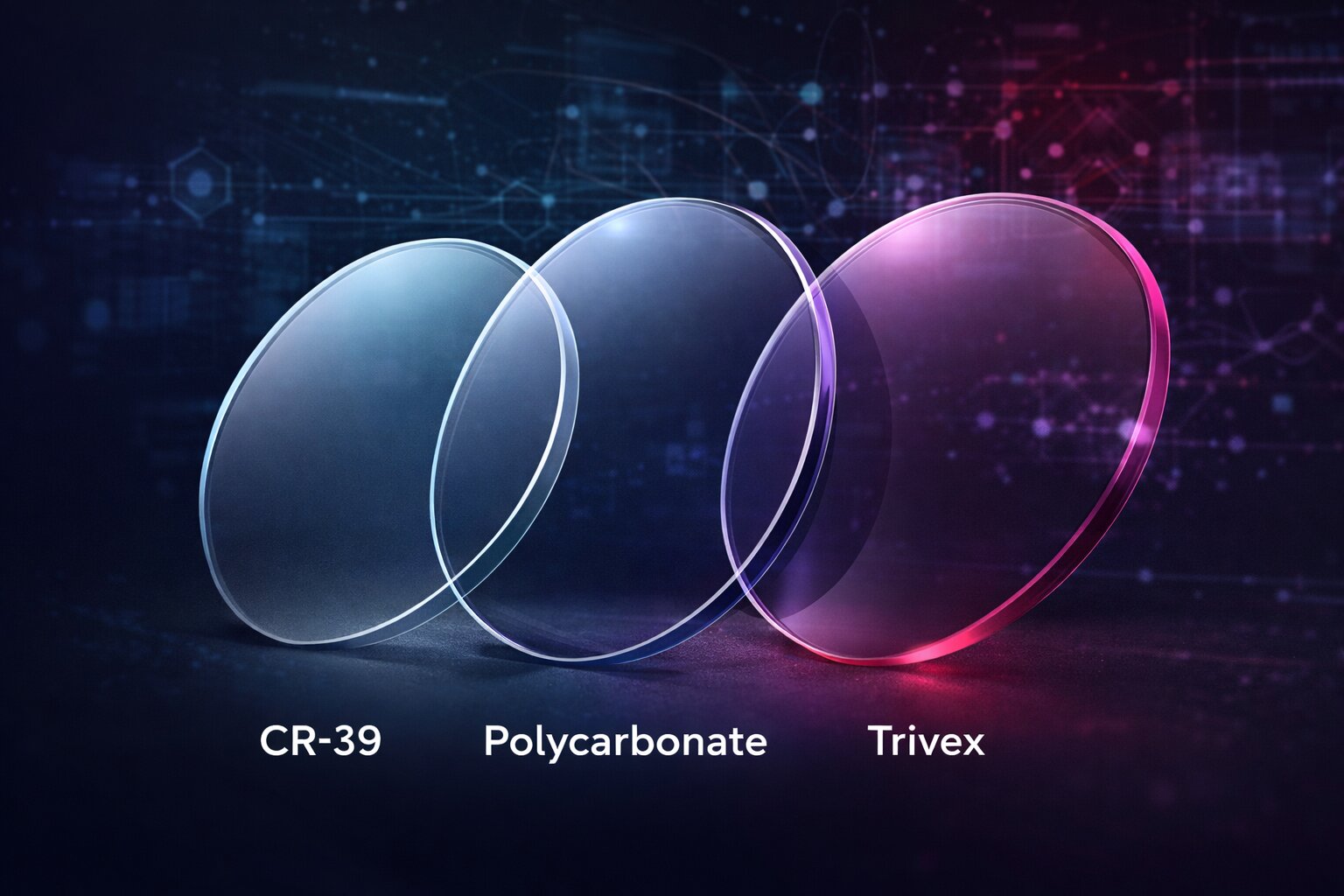
Top 5 Premium Lens Coatings Compared for Optical Practices

Upgrading lens material improves structure. Upgrading coating improves experience.
In many clinics, anti-reflective coatings are still positioned as an add-on, a line item at the bottom of the invoice. In reality, premium lens coatings influence glare control, night driving comfort, cleaning ease, scratch resistance, and long-term patient satisfaction. They also influence remakes, warranty claims, and how confidently your staff recommends upgrades.
This is not a cosmetic detail. It’s a performance layer.
Below is a structured, practice-focused comparison of five premium AR coating tiers commonly used in today’s optical market, evaluated not just by features, but by clinical and operational impact.
Why Premium Lens Coatings Matter More Than Ever
Digital exposure is constant. Night driving complaints are increasing. Patients expect lenses to be thin, clear, easy to clean, and resistant to daily wear. A basic anti reflective coating reduces surface glare. A premium coating addresses glare, durability, smudging, static, cleaning friction, and often UV or blue light management as part of a multi-layer system.
From a practice perspective, coatings influence three measurable outcomes: patient perception, remake frequency, and warranty pressure.
Patients rarely say, “My coating failed.” They say, “These are hard to clean,” “They scratch too easily,” or “The glare is worse than before.” Many of those complaints trace back to coating tier selection or processing quality.
What Defines a Truly Premium AR Coating?
A modern premium AR coating is not a single layer. It is a multi-layer stack engineered at microscopic thickness levels, typically applied in vacuum deposition chambers. A modern premium AR coating is not a single layer but a multi-layer stack engineered at microscopic thickness levels. For a deeper breakdown of performance layers, see our article about anti-reflective coating technology.
While layer counts vary by manufacturer, most premium stacks include:
- hard coat base layer for surface durability
- anti reflective interference layers tuned for visible light reduction
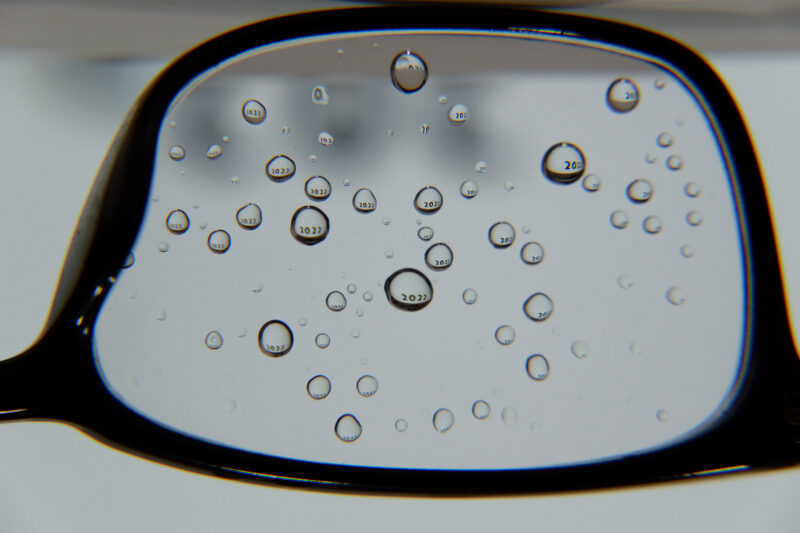
- hydrophobic layer to repel water
- oleophobic layer to resist oils and smudges
- in some designs, integrated UV or blue light management
Hydrophobic coatings improve cleanability by reducing surface energy, allowing water to bead and roll off. Oleophobic layers reduce adhesion of skin oils, making fingerprints easier to remove. Scratch resistance depends not only on coating chemistry but on surface preparation and curing quality.
Premium glare reduction is particularly noticeable at night. Headlight scatter is influenced by surface reflections; high-quality AR coatings can reduce front-surface reflectance to below 1% per surface, compared to significantly higher levels in uncoated lenses.
Durability is not just chemistry. It is processing. Poor surface prep or inconsistent curing increases the risk of delamination, crazing, or micro-cracking over time. Our step-by-step overview of how freeform lenses are made explains how surface preparation and curing consistency begin long before coating application.
Top 5 Premium Lens Coatings Compared
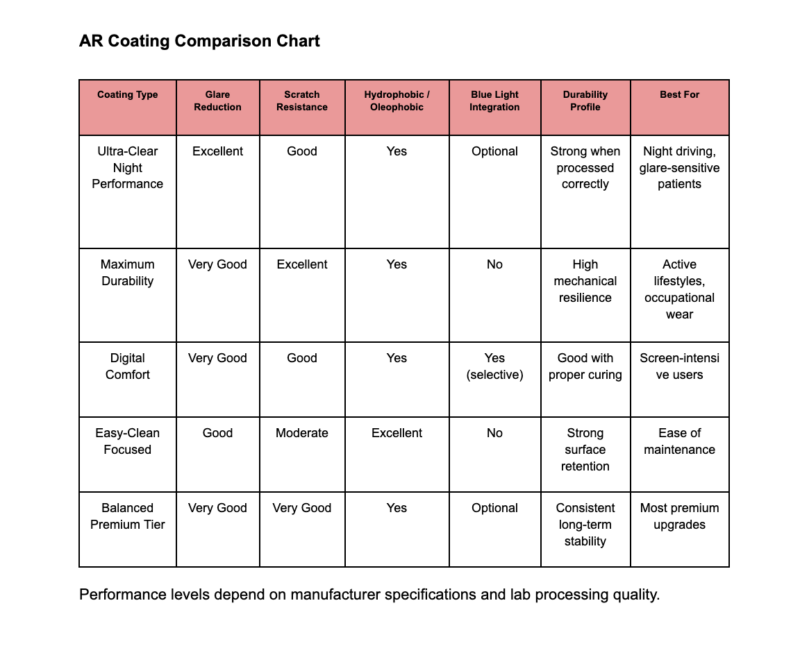
The coatings below represent five common premium performance tiers seen across leading optical manufacturers and independent labs. Names are generalized to focus on functional differences rather than branding.
1. Ultra-Clear Night Performance Coating
Best for maximum glare reduction and night driving comfort.
Designed with advanced interference stacks to minimize reflectance across visible wavelengths, especially in high-glare environments. Often marketed toward drivers and digitally active patients. Strong clarity, high cosmetic transparency.
Ideal for: night drivers, high-glare sensitivity patients, premium progressive wearers.
2. Maximum Durability Coating
Best for scratch resistance and long-term wear.
Engineered with reinforced hard coat layers and enhanced surface bonding. Surface hardness is prioritized over absolute reflectance performance. Cleaning performance is typically strong but secondary to durability.
Ideal for: active adults, patients rough on eyewear, occupational use.
3. Digital Comfort Coating with Blue Light Integration
Best for screen-intensive lifestyles.
Combines AR stack with selective blue light management technology. Important distinction: true blue light blocking should be selective and balanced, excessive filtration can alter color perception. Premium designs manage short-wavelength peaks without creating strong yellow tint.
Ideal for: office workers, students, digital-heavy users.
4. Easy-Clean Hydrophobic/Oleophobic Coating
Best for maintenance simplicity.
Optimized for surface slickness, reducing water spotting, fingerprint adhesion, and cleaning friction. Reflectance reduction is solid, but the primary value is convenience and long-term cosmetic retention.
Ideal for: patients prioritizing ease of cleaning, humid climates, frequent outdoor use.
5. Balanced Premium All-Around Coating
Best overall performance balance.
Combines high glare reduction, solid scratch resistance, hydrophobic and oleophobic protection, and stable long-term adhesion. Not extreme in any one category, but consistently strong across all.
Ideal for: standard premium upgrade structure in most independent practices.
How Coating Selection Affects Remakes and Retention
From a lab perspective, coating-related remakes generally fall into two categories: structural failures and perception failures.
Structural failures include delamination, crazing, surface cracking near drill mounts, or premature scratch patterns. These are often linked to processing inconsistencies, incompatible frame stress, or improper surface preparation.
Perception failures are more subtle: glare complaints, persistent smudging, difficulty cleaning, night halos. In many cases, the coating technically meets specification but does not meet expectation.
Premium coatings reduce both types of failure when matched correctly to patient lifestyle and processed under controlled lab conditions.
How to Choose the Right Premium Coating for Your Practice
Start by defining what your practice stands for. If your positioning is durability-first, your coating tier should reflect that. If you promote digital comfort and modern lens design personalization, your coating strategy should align.
Most efficient practices standardize one primary premium tier for the majority of jobs and offer one specialized upgrade path for edge cases such as heavy night drivers or extreme digital users.
Communicating coating value works best when framed around outcome, not chemistry. Instead of describing layers, describe benefits: reduced night glare, easier cleaning, longer cosmetic clarity.
The Role of Your Optical Lab in Coating Performance
Coating chemistry is only half the equation. Execution matters equally.
In-house coating facilities allow tighter environmental control, consistent vacuum deposition parameters, better quality checks, and faster remake handling. Outsourced processing increases variability, especially in turnaround-sensitive markets.
We discuss this in more depth in article about how optical labs are using technology to revolutionize vision care.
At MIA LAB, coating control is integrated into the production workflow. Surface preparation, curing consistency, and final inspection standards are aligned with the lens material and design selected. That alignment reduces variability and variability is what drives remakes.
Premium coatings are not about selling an upgrade. They are about protecting the integrity of the entire lens system.
FAQ: Premium Anti Reflective Coatings
What is the difference between standard and premium anti reflective coatings?
Standard AR reduces basic glare. Premium coatings add durability layers, hydrophobic and oleophobic protection, and often improved reflectance control across a broader light spectrum.
Do premium AR coatings reduce night glare?
Yes. High-performance multi-layer stacks reduce surface reflections that contribute to headlight scatter and halo perception, particularly in high-contrast night conditions.
Are hydrophobic coatings worth it?
For most patients, yes. Hydrophobic and oleophobic layers significantly improve cleanability and long-term cosmetic appearance.
How long should a premium lens coating last?
With proper care and correct processing, premium coatings should maintain performance for several years. Early failure typically indicates stress issues, improper cleaning habits, or processing inconsistencies.
Does coating quality influence remakes?
Absolutely. Coating durability, adhesion, and surface performance directly impact remake rates and patient satisfaction.
Premium lens coatings are not a small detail. They are the interface between lens technology and daily life. When selected strategically and processed correctly, they reduce friction operationally and experientially.
In a competitive optical environment, that consistency becomes visible.


