
Photochromic Lenses Explained: Are They Worth It for Patients and Practices


Photochromic lenses are often presented as a convenient upgrade: one pair of glasses that adapts to light and eliminates the need for switching between clear lenses and sunglasses. In practice, their value depends less on the concept itself and more on how well expectations match real-world performance.
Patients don’t evaluate photochromic lenses in technical terms. They notice how quickly lenses darken, how fast they return to clear, how they behave in the car, and whether they actually make daily life easier. When those factors align, the experience feels seamless. When they don’t, the product feels inconsistent.
Understanding how photochromic lenses work and where they truly add value helps practices recommend them with confidence and avoid unnecessary dissatisfaction.
What Are Photochromic Lenses and How Do They Work
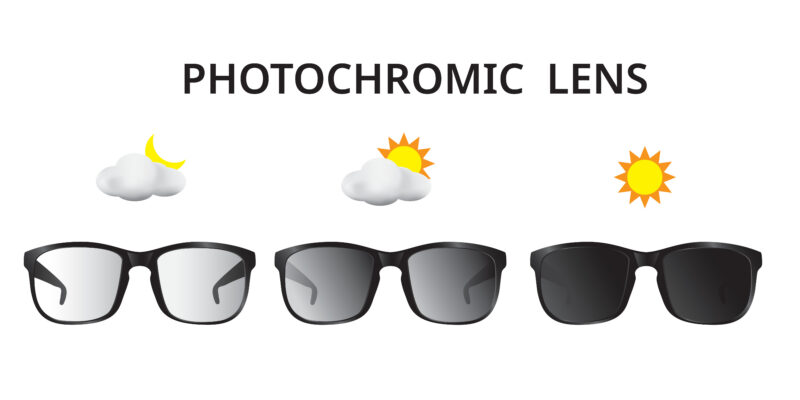
Photochromic lenses are light-responsive lenses that automatically darken when exposed to ultraviolet (UV) radiation and return to a clear state when UV exposure decreases. The mechanism is based on photoactive molecules embedded in or applied to the lens material, which change structure when exposed to UV light.
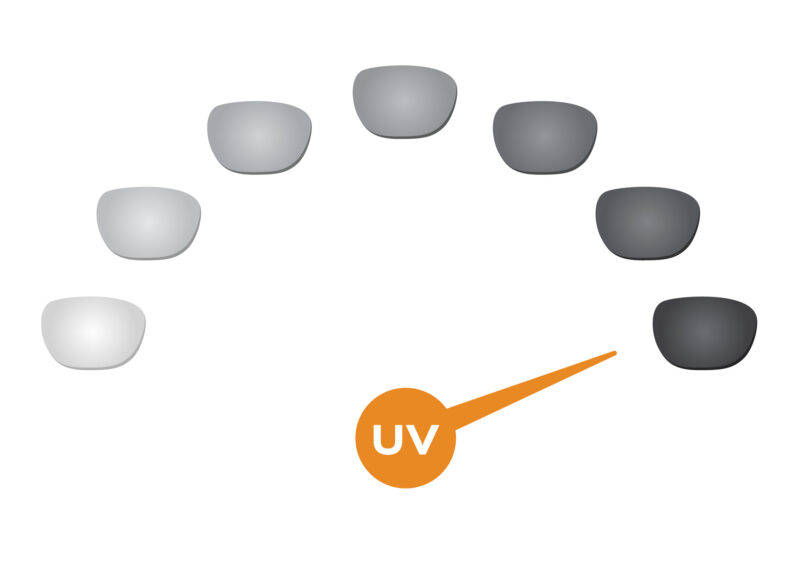
In outdoor conditions, where UV levels are higher, the lenses activate and darken. Indoors, where UV exposure is minimal, they gradually return to clear. This transition is not instantaneous and varies depending on light intensity, temperature, and lens technology.
What makes modern photochromic adaptive lenses different from earlier generations is not just their ability to darken, but how consistently and predictably they perform. Activation speed, fade-back time, and color stability have all improved, but they still depend on environmental conditions rather than user control.
One detail that often gets overlooked is timing. Activation can feel fast in bright sunlight, but fade-back indoors takes longer, which is where many patients form their opinion. If lenses remain slightly tinted longer than expected, patients may perceive this as a limitation rather than a normal behavior.
When Photochromic Lenses Actually Improve Patient Experience
Photochromic lenses work best when they align with routine, not edge cases. For patients who move frequently between indoor and outdoor environments, they reduce friction by removing the need to switch between multiple pairs of glasses.
They also provide continuous UV protection, which remains active regardless of whether the lenses are fully darkened. This is an important distinction, as UV protection lenses do not rely on visible tint to function. Even in a clear state, protection is still present.
From a practical standpoint, patients who spend time outdoors throughout the day, walk between locations, or prefer minimal accessories tend to benefit the most. The experience becomes less about the visual effect and more about convenience. The lenses adapt without requiring attention.
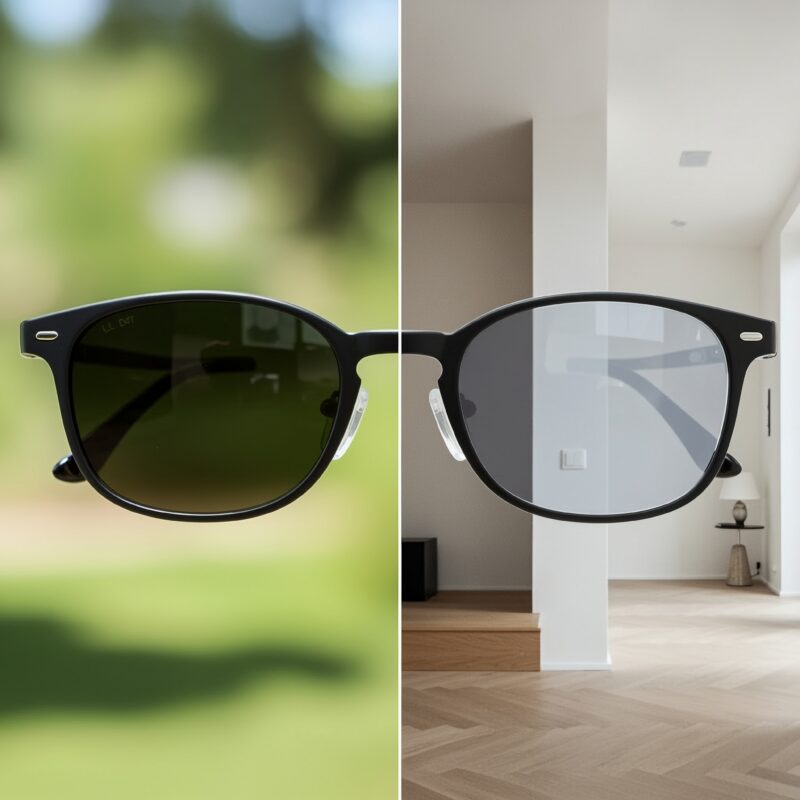
However, patients who expect a full sunglasses replacement or perfectly instant transitions may feel that something is missing. That gap is not a product failure, but a mismatch between expectation and behavior.
Photochromic Lenses vs Sunglasses: What Patients Should Understand
Photochromic lenses and sunglasses serve overlapping but not identical roles. While both reduce light intensity, they do so under different conditions and with different levels of control.
Photochromic lenses rely on UV exposure to activate. This creates a well-known limitation in driving, where windshields filter out a significant portion of UV light. As a result, lenses may not darken fully inside a car, even in bright conditions. Patients often notice this immediately and interpret it as inconsistent performance.
Sunglasses, by contrast, provide constant and predictable tint regardless of environment. They are still the more reliable option for high-glare situations such as driving, beach environments, or prolonged outdoor exposure.
In practice, the most effective recommendation is often not one or the other, but both. Photochromic lenses handle everyday transitions, while sunglasses provide maximum protection in high-intensity conditions. Framing it this way helps patients understand that each solution serves a specific purpose.
Photochromic Lenses vs Blue Light Lenses
These two lens categories are frequently confused, but they address entirely different problems.
Photochromic lenses respond to environmental light, primarily UV, and are designed to improve comfort outdoors. Blue light lenses are designed to manage exposure to high-energy visible light from digital screens and artificial lighting.
Some modern lenses combine both features, integrating blue light filtering into photochromic designs. However, combining technologies does not mean they perform the same function. One adapts to outdoor light conditions, while the other targets indoor visual behavior.

For patients, the distinction becomes clear when framed in context. Photochromic lenses support transitions between environments, while blue light lenses support extended screen use. When explained this way, the decision becomes simpler and more aligned with actual needs.
Limitations of Photochromic Lenses (What Patients Notice)
Photochromic lenses perform consistently within their design parameters, but those parameters are often misunderstood.
One of the most common observations is reduced performance in the car. Because activation depends on UV light, and windshields block a large portion of it, lenses may remain lighter than expected while driving. This is not a defect, but a physical limitation of the technology.
Temperature also plays a role. In colder environments, lenses tend to darken more and fade more slowly. In warmer conditions, they may not reach the same level of darkness. Patients rarely expect this variability, but they immediately notice it once they experience it.
Another factor is transition timing. While activation outdoors can feel relatively fast, returning to a fully clear state indoors takes longer. This delay is subtle but important, especially in environments where lighting changes frequently.
When these behaviors are explained in advance, they are accepted as normal. When they are not, they become sources of dissatisfaction.
How Coatings and Materials Affect Photochromic Performance
Photochromic performance is not determined by the light-responsive layer alone. It is influenced by the entire lens system, including material choice and surface coatings.
Anti reflective coatings are particularly important. As lenses darken and lighten, surface reflections become more noticeable. Without proper AR coating, patients may experience increased glare, especially in low-light conditions. This directly affects perceived clarity and comfort.

For a deeper understanding of coating performance, see:
https://mialab.com/anti-reflective-coating
Lens material also plays a role. Higher index materials reflect more light, which makes coating quality even more critical. Inconsistent coating application or lower-quality surface treatments can amplify minor visual issues and reduce overall satisfaction.
Photochromic technology performs best when it is integrated into a well-balanced system rather than treated as an isolated feature.
How Optical Labs Influence Photochromic Lens Quality
The consistency of photochromic performance depends not only on the material itself, but on how the lens is manufactured and finished.
Activation uniformity, color consistency, and long-term durability are all affected by production quality. Variations in surfacing, coating application, or curing processes can lead to uneven performance that patients perceive as inconsistency.
In practice, these issues appear as subtle differences between lenses, uneven tinting, or faster-than-expected degradation. While the underlying technology may be sound, execution determines how it performs in daily use.
A reliable optical lab minimizes these variations through controlled processes and consistent standards. This reduces complaints that are difficult to diagnose but easy for patients to feel.
If you’re evaluating lab quality, start here:
https://mialab.com/how-to-choose-the-best-optical-lab
When Photochromic Lenses Are Worth It – And When They’re Not
Photochromic lenses provide the most value when they match how patients actually use their glasses.
They are most effective for patients who move frequently between indoor and outdoor environments, prefer a single-pair solution, and want consistent UV protection without thinking about it. They also work well for those who prioritize convenience over maximum darkness.
They are less effective for patients who spend long periods driving, expect instant transitions, or require consistent high-level tint in bright conditions. In these cases, relying solely on photochromic lenses often leads to disappointment.
The key is not to position them as a universal solution, but as a specific tool that works extremely well in the right context.
FAQ: Photochromic Lenses Explained
- What are photochromic lenses?
They are lenses that automatically darken in response to UV light and return to clear when UV exposure decreases. - Do photochromic lenses work in the car?
Not fully. Windshields block much of the UV light required for activation, so lenses may remain lighter than expected. - Are photochromic lenses worth it?
They are worth it for patients who want convenience and frequently move between indoor and outdoor environments. - How long do photochromic lenses last?
Performance typically remains stable for several years, depending on usage and environmental exposure. - Do photochromic lenses block UV light?
Yes. UV protection is present even when the lenses are clear.
Final Perspective: A Convenience Tool, Not a Universal Solution
Photochromic lenses are not defined by how dark they get, but by how well they fit into everyday routines.
When used in the right context, they simplify daily wear, reduce friction, and provide consistent protection without requiring attention. When used as a replacement for all light conditions, they often fall short of expectations.
In modern optical practice, the goal is not to recommend photochromic lenses as a default upgrade, but to position them accurately. When expectations and performance align, they become one of the most reliable and appreciated lens solutions available.


